

Vertical AI Agents are changing how financial technology companies scale operations.
In this case study, we explain how Vertical AI Agents helped a UK-based B2B financial services platform automate sales qualification, reduce support response times from 48 hours to under 3 minutes, and increase qualified meetings by 300%.
Unlike generic chatbots, Vertical AI Agents execute real workflows across sales, support, and digital visibility.
Client: UK-based B2B Financial Services Platform
Industry: Financial Technology & Wealth Management
Rapid growth is exciting — until operations start breaking under the pressure.
That was the situation for a fast-growing UK financial infrastructure provider. Demand for their platform was increasing, but their internal systems could not scale at the same speed.
Sales teams were overwhelmed with low-quality leads. Support teams struggled with repetitive enquiries. And traditional SEO traffic was declining as buyers began using AI-driven search tools instead of Google.
The company needed more than a chatbot or simple automation. They required secure, autonomous systems capable of executing real business workflows.
That is when they partnered with Global Nodes.
Discover the platform here: 👉 http://aiagents.globalnodes.ai/
The Problem Most FinTech Companies Face
Rapid growth creates operational pressure.
Sales teams spend too much time qualifying leads.
Support teams struggle with repetitive enquiries.
Traditional SEO traffic declines as buyers move to AI-driven search.
This is where Vertical AI Agents provide a scalable solution.
Despite strong market demand, three operational bottlenecks began limiting growth.
1. Sales Teams Wasting Time on Unqualified Leads
Account executives were spending nearly 70% of their time chasing prospects who were not ready to buy. Much of the process involved manual qualification and repetitive CRM data entry.
2. Customer Support Overload
The support team was flooded with verification and account-related queries. Average response times reached 48 hours, creating frustration for customers.
3. Declining Organic Traffic
Traditional SEO strategies were losing effectiveness as potential clients increasingly used AI-powered search tools and conversational interfaces to research vendors.
The leadership team needed a scalable solution that could operate across sales, support, and digital visibility simultaneously.
How Vertical AI Agents Solved the Problem
Global Nodes deployed a specialised ecosystem of Vertical AI Agents designed specifically for financial services workflows.
Each agent handled a specific role across the organisation.
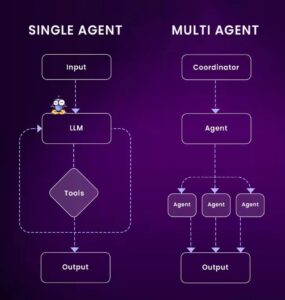
Instead of deploying one general AI model, Global Nodes designed a specialised multi-agent ecosystem.
Each AI agent had a dedicated role and worked together as part of a coordinated system.
This approach delivered higher reliability, better compliance, and easier control.
1. Compliance-Safe Vertical AI Agents
Financial services operate under strict regulatory frameworks such as FCA regulations and GDPR.
Generic AI models cannot be trusted with sensitive financial workflows.
Global Nodes solved this by building vertical AI agents specifically trained for the financial sector.
How It Worked
The system used Retrieval-Augmented Generation (RAG).
This allowed the agents to retrieve knowledge only from:
-
internal compliance manuals
-
proprietary financial databases
-
internal documentation and policy libraries
Because the agents relied exclusively on verified company data, the system avoided hallucinations and ensured all outputs remained compliant.
2. AI Customer Service Agents
The legacy rules-based chatbot was replaced with autonomous AI customer service agents.
These agents integrated directly with backend systems including:
-
Zendesk
-
payment gateways
-
account verification systems
Key Capabilities
The AI agents could:
• authenticate users securely • retrieve transaction histories • process tier-1 and tier-2 requests • analyse customer sentiment • escalate complex cases with detailed summaries for human agents
Impact
Support response times dropped dramatically:
From 48 hours → under 3 minutes
The system could handle thousands of simultaneous requests without increasing staffing costs.
3. AI Sales Agents That Qualify Leads Automatically
Vertical AI Agents for Sales Qualification
These Vertical AI Agents automatically analyse visitor intent, qualify leads, and push structured data directly into the CRM.
Result: Sales teams only speak with high-intent prospects.
To improve pipeline efficiency, Global Nodes deployed AI sales agents embedded across the client’s digital touchpoints.
These agents operated across:
-
website conversations
-
inbound lead forms
-
outbound email campaigns
How the Sales Agents Worked
When a prospect engaged with the platform, the agent would:
-
Analyse the visitor’s company profile
-
Conduct a natural multi-turn conversation
-
Qualify intent, budget, and requirements
-
Automatically push structured data into Salesforce
-
Schedule discovery calls with sales representatives
Impact
Sales teams no longer spent time filtering poor leads.
As a result:
Closed-won conversion rates increased by 40%.
Human sales teams were able to focus only on high-intent prospects already educated by AI agents.
4. AI Agents for Next-Generation SEO
Search behaviour is changing.
B2B buyers increasingly rely on tools such as:
-
ChatGPT
-
Perplexity
-
Claude
Instead of only using traditional search engines.
To adapt to this shift, Global Nodes built AI agents focused on Generative Engine Optimisation (GEO).
What These Agents Did
The SEO agents continuously:
• analysed AI-generated answers about financial providers • monitored brand mentions in AI search results • updated structured data and schema markup • identified missing content topics • optimised content for LLM ingestion
This ensured that when AI systems recommended financial vendors, the client appeared as a trusted source.
The Framework: How to Build AI Agents for Your Business
Many companies ask the same question:
“How can we deploy AI agents without risking data security?”
The Global Nodes framework follows four stages:
1. Process Mapping
Identify high-volume tasks draining human resources.
2. Data Structuring & RAG
Clean and organise internal data so AI works with verified information.
3. Role-Specific Agent Deployment
Deploy specialised agents for sales, support, or SEO rather than one general model.
4. Human-in-the-Loop Supervision
Start with a co-pilot mode where teams review agent decisions before full automation.
Results After Six Months
The impact of the AI agent ecosystem was substantial.
82% reduction in support tickets saving more than £450,000 in operational costs
300% increase in qualified sales meetings
150% growth in brand visibility within AI search responses
The company scaled its growth without increasing operational headcount.
AI agents are not simply chatbots.
They are autonomous digital workers capable of executing complex workflows across sales, support, and growth operations.
Companies that adopt these systems early will gain a major operational advantage.
If your organisation wants to build secure, specialised AI agents tailored to your workflows, explore the Global Nodes platform.
